Building Healthy Garden Soil
Most problems in a home garden trace back to the soil rather than the plant. Soil is the reservoir that holds water, air, and nutrients between rains and waterings, and its physical structure decides how easily roots can move through it. Before reaching for fertilizer, it is usually worth understanding what kind of soil a bed already has.
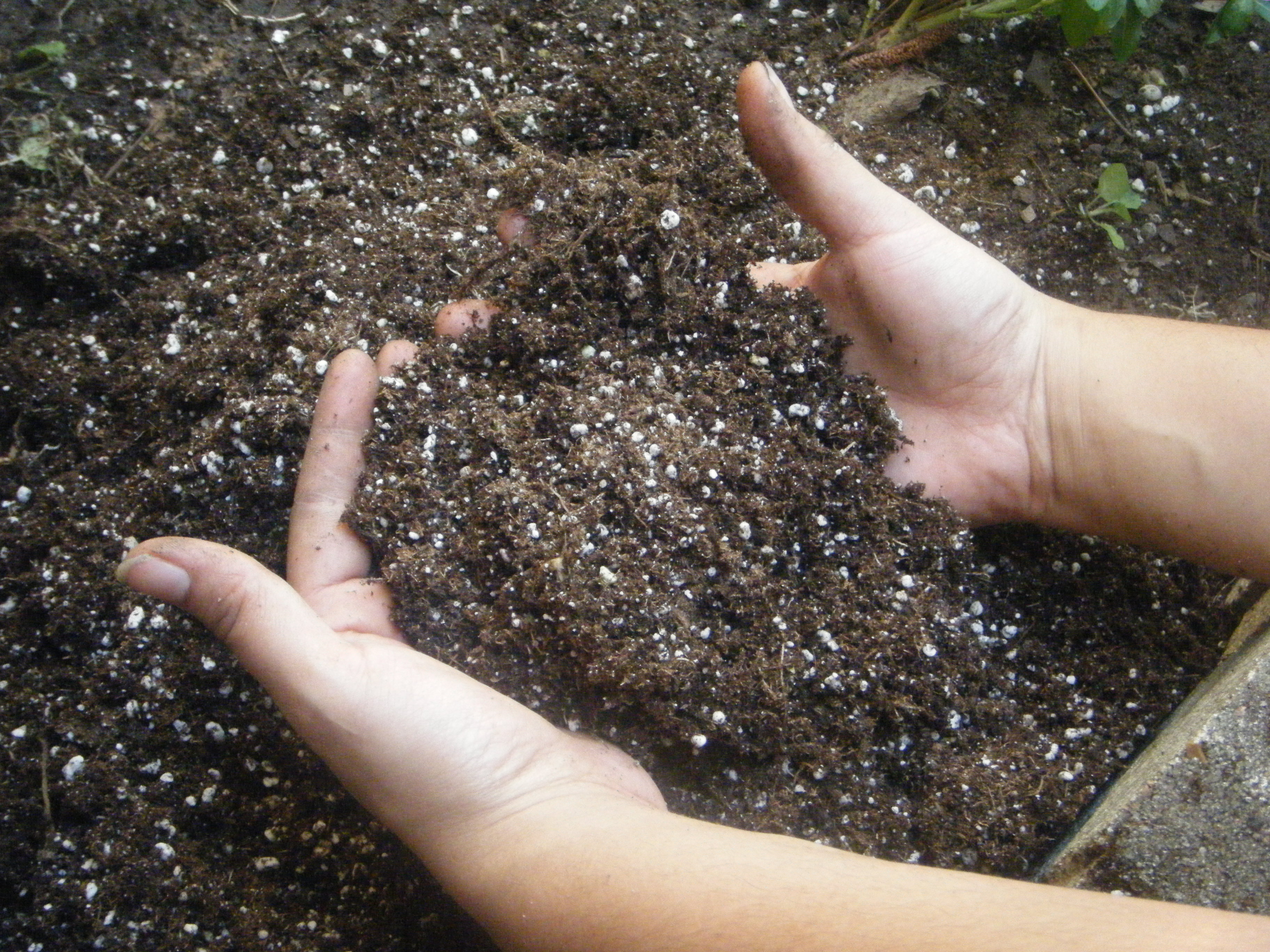
Reading texture by hand
Soil texture describes the proportion of sand, silt, and clay particles. You can get a rough sense of it without a lab: take a moistened handful and try to squeeze it into a ribbon between your thumb and forefinger.
- Sandy soil feels gritty, will not hold a ribbon, and drains quickly — it warms early but dries out fast.
- Silty soil feels smooth, almost floury, and holds moisture well.
- Clay soil feels sticky, forms a long ribbon, and holds water so well that it can stay waterlogged and compacted.
Most garden soils are a blend, often called loam, and the goal of soil care is to move whatever you have toward a loam-like balance of drainage and water retention.
Field test
To check drainage, dig a hole roughly 30 cm deep, fill it with water, let it drain, then fill it again and watch how long the second fill takes to empty. Very fast or very slow drainage both point to structure that organic matter can help correct.
Why organic matter does the heavy lifting
Organic matter — decomposed leaves, compost, roots, and the living organisms feeding on them — is what ties the mineral particles into crumbs. Those crumbs create the pore spaces that hold both air and water. In sandy soil, organic matter improves water retention; in clay soil, the same material opens the structure so excess water can drain and roots can breathe.
This is why a single amendment, finished compost, helps soils that seem like opposites. It is not adding a large dose of any one nutrient so much as improving the structure that lets the soil do its own work.
Amending a bed with compost
For an established bed, a practical approach used in many home guides is to spread a layer of finished compost over the surface and either work it lightly into the top few centimetres or let soil life draw it down over a season. Building beds gradually, year after year, tends to produce more stable results than a single heavy application.
Testing before you add
Guessing at nutrients can waste money and, in the case of excess phosphorus, contribute to runoff problems. A soil test from a recognized laboratory reports pH and nutrient levels and removes most of the guesswork. The Government of Canada and provincial agriculture resources describe how soil sampling and testing support healthy growth without over-application.
Keep it simple
For most home beds the order of priority is: confirm drainage, raise organic matter with compost, then test before adding specific nutrients. Fertilizer is a correction, not a substitute for structure.
Once a bed drains well and carries a steady supply of organic matter, the next decision is timing — what to plant and when. That is shaped by your region's frost calendar, covered in Planting Cycles & Frost Timing in Canada. The compost that anchors all of this is the subject of Balancing Greens and Browns.
References
- Agriculture and Agri-Food Canada — soil and agronomy resources.
- Environment and Climate Change Canada — background on soil, water, and runoff.
- Wikipedia: Soil texture — overview of sand, silt, and clay fractions.